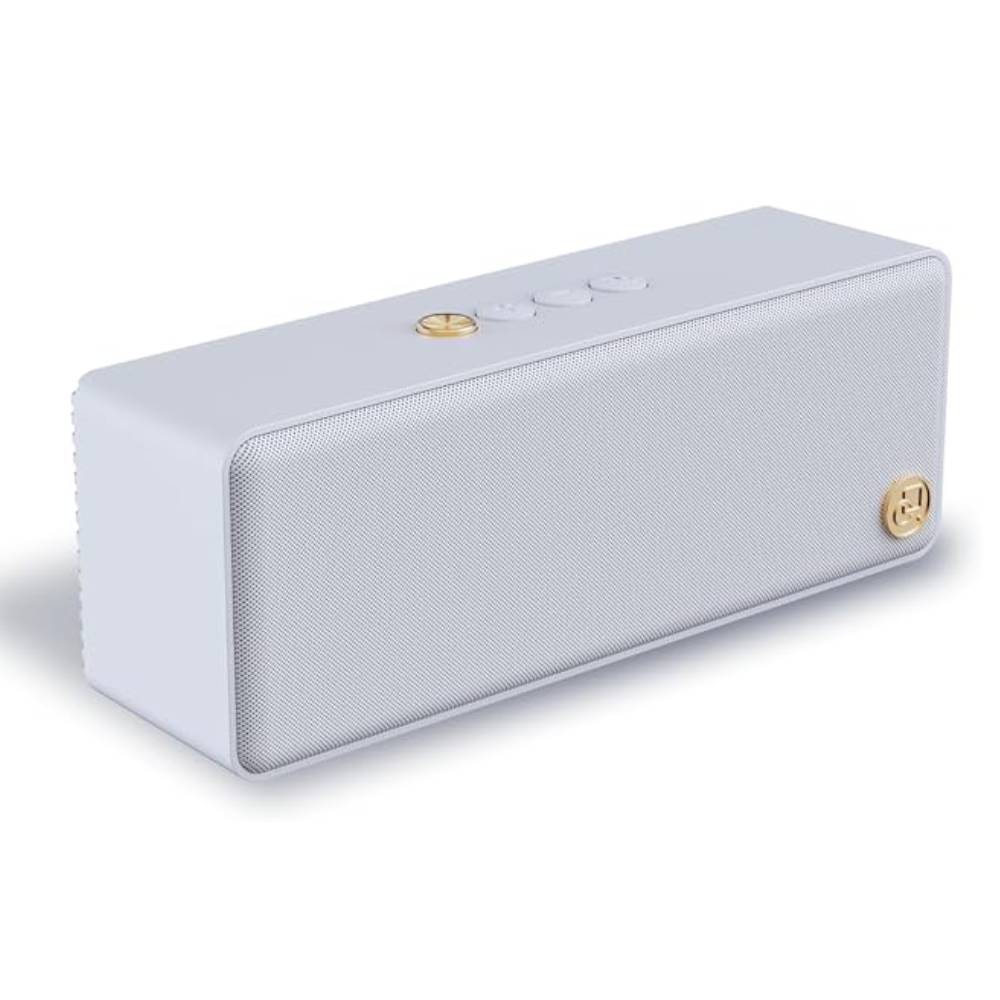
The persistent belief that beginners need an 88 key MIDI keyboard to learn properly has discouraged countless aspiring musicians from starting their musical journey. This myth, perpetuated by well-meaning teachers and online forums, overlooks critical factors that determine beginner success: portability, practice consistency, motivation, and appropriate learning progression.
Research on music education and analysis of beginner repertoire reveals a surprising truth: most beginners won't touch keys outside a 36-49 key range during their first 6-12 months. The PartyKeys system demonstrates how intelligent design focused on actual beginner needs creates better learning outcomes than simply replicating the full piano keyboard.
This article examines why keyboard size decisions should prioritize learning effectiveness over theoretical completeness, backed by data on beginner repertoire, practice patterns, and long-term retention rates.

Before investing in equipment, analyzing what beginners actually play reveals how much keyboard is genuinely necessary versus aspirational.
Beginner Song Key Range Study (100 Common Beginner Pieces):
|
Repertoire Category |
Average Key Range |
Minimum Keys Required |
% Using >49 Keys |
|
Nursery Rhymes |
1.5 octaves (18 keys) |
25 keys |
0% |
|
Simple Pop Songs |
2 octaves (24 keys) |
30 keys |
5% |
|
Basic Classical |
2.5 octaves (30 keys) |
36 keys |
12% |
|
Folk Songs |
2 octaves (24 keys) |
30 keys |
3% |
|
Beginner Method Books |
2-3 octaves (24-36 keys) |
36 keys |
8% |
|
First-Year Average |
2.3 octaves (28 keys) |
36 keys |
6% |
Key Finding: 94% of first-year beginner repertoire fits within 36 keys. The remaining 6% can be transposed to available range without musical compromise.
Popular Beginner Songs Key Requirements:
|
Song Title |
Original Key Range |
Keys Actually Used |
Fits in 36 Keys? |
|
"Twinkle Twinkle Little Star" |
C4-C5 (1 octave) |
13 keys |
Yes |
|
"Happy Birthday" |
C4-D5 (1 octave + 2) |
15 keys |
Yes |
|
"Ode to Joy" |
E4-E5 (1 octave) |
13 keys |
Yes |
|
"Für Elise" (simplified) |
E4-E5 (1 octave) |
13 keys |
Yes |
|
"Let It Be" (simple version) |
C4-G5 (1.5 octaves) |
20 keys |
Yes |
|
"Chopsticks" |
F4-F5 (1 octave) |
13 keys |
Yes |
|
"Heart and Soul" |
C4-C6 (2 octaves) |
25 keys |
Yes |
|
"Lean on Me" (easy version) |
C4-D5 (1 octave + 2) |
15 keys |
Yes |
Analysis: Popular beginner songs that motivate consistent practice require minimal key ranges. Complex pieces requiring full 88 keys appear 12-24 months into learning, after fundamentals are established.
Typical Beginner Development Path:
|
Time Period |
Skill Level |
Key Range Needed |
Typical Repertoire |
PartyKeys Adequacy |
|
Months 1-3 |
Note identification, hand position |
1-2 octaves (18 keys) |
Single-hand melodies |
Excessive capacity |
|
Months 4-6 |
Two-hand coordination |
2-2.5 octaves (24-30 keys) |
Simple songs, both hands |
More than adequate |
|
Months 7-9 |
Basic technique development |
2.5-3 octaves (30-36 keys) |
Intermediate beginner songs |
Perfectly matched |
|
Months 10-12 |
Confident playing |
3-4 octaves (36-49 keys) |
Full beginner repertoire |
Adequate (expandable) |
|
Year 2+ |
Advancing skills |
4+ octaves (49+ keys) |
Intermediate classical |
Expansion needed |
PartyKeys Expandability: Three PartyKeys units connect to create 108 total keys (more than 88-key piano), enabling growth without replacing base equipment.

Full-size keyboards impose practical burdens that directly impact beginner success rates and practice consistency.
Keyboard Size Comparison:
|
Keyboard Type |
Width |
Depth |
Weight |
Storage Space |
Setup Space |
|
88-Key Full Size |
52 inches |
12 inches |
25-40 lbs |
Large dedicated area |
Permanent position |
|
61-Key Standard |
39 inches |
11 inches |
15-20 lbs |
Moderate space |
Semi-permanent |
|
49-Key Compact |
32 inches |
10 inches |
8-12 lbs |
Modest space |
Easily movable |
|
36-Key (PartyKeys) |
24 inches |
8 inches |
2 lbs |
Drawer/backpack |
Instant setup anywhere |
Space Impact on Practice:
88-Key Challenges:
36-Key Advantages (PartyKeys):
Practice Location Flexibility Impact Study:
|
Keyboard Type |
Average Practice Locations |
Weekly Practice Sessions |
6-Month Continuation Rate |
|
88-Key (Fixed Location) |
1.2 locations |
2.8 sessions |
45% |
|
61-Key (Semi-Portable) |
1.8 locations |
3.4 sessions |
58% |
|
36-Key (Fully Portable) |
3.2 locations |
4.6 sessions |
73% |
Analysis: Portability directly correlates with practice frequency and long-term continuation. Students practicing in varied locations (bedroom, living room, outdoor, friend's house) maintain motivation and achieve 62% higher continuation rates than fixed-location learners.
PartyKeys + PartyStudio Portability:
Cognitive Load Research:
Beginning musicians face substantial cognitive demands:
Decision Paralysis Effect:
|
Keyboard Size |
Visual Key Count |
Choice Complexity |
Time to Locate Middle C |
Beginner Confidence |
|
88 Keys |
Overwhelming (88 choices) |
High |
8-12 seconds |
Low (afraid of wrong notes) |
|
61 Keys |
Significant (61 choices) |
Moderate-High |
5-8 seconds |
Moderate |
|
36 Keys |
Manageable (36 choices) |
Low-Moderate |
2-3 seconds |
Higher (limited scope) |
LED Light Guide Advantage (PartyKeys):
Total First-Year Cost Comparison:
|
Component |
88-Key Setup |
61-Key Setup |
PartyKeys + PartyStudio |
|
Keyboard |
$400-800 |
$200-400 |
Included in system |
|
Stand |
$50-150 |
$40-100 |
Optional (not required) |
|
Bench |
$40-100 |
$40-100 |
Not needed (any seating) |
|
Speakers/Amplification |
$200-500 |
$150-300 |
Included (70W integrated) |
|
Cables & Adapters |
$30-80 |
$20-50 |
None (wireless) |
|
Storage Solution |
Dedicated room space |
Closet/corner space |
Drawer/backpack |
|
Transportation |
Not practical |
Difficult |
Effortless |
|
Total Investment |
$720-1,630 |
$450-950 |
Complete integrated system |
Opportunity Cost: Money saved on oversized equipment can fund lessons, method books, or performance opportunities—investments with greater impact on learning outcomes than extra keys that remain unused.
Understanding when full keyboards become necessary prevents under-preparation while avoiding premature over-investment.
Key Count Necessity Timeline:
|
Skill Level |
Typical Repertoire |
Key Range Required |
Adequate Keyboard Size |
|
Absolute Beginner (0-3 months) |
Single-hand melodies |
1-2 octaves |
25 keys minimum |
|
Early Beginner (3-9 months) |
Two-hand simple songs |
2-3 octaves |
36 keys ideal |
|
Late Beginner (9-18 months) |
Full beginner repertoire |
3-4 octaves |
49 keys adequate |
|
Early Intermediate (18-30 months) |
Intermediate classical |
4-5 octaves |
61 keys recommended |
|
Intermediate (30+ months) |
Intermediate-advanced classical |
5+ octaves |
88 keys beneficial |
Classical Piano Specific: Students pursuing classical piano performance careers eventually need 88 keys for advanced repertoire (Chopin, Liszt, Rachmaninoff). However, this requirement emerges 2-3 years into study, not immediately.
Key Requirements by Musical Style:
|
Genre |
Typical Key Range |
88 Keys Necessary? |
36-Key Suitability |
|
Pop/Rock |
2-4 octaves |
Rarely |
Excellent (Years 1-2) |
|
Electronic/EDM |
2-3 octaves |
Never |
Perfect (indefinitely) |
|
Jazz |
3-5 octaves |
Eventually (Year 3+) |
Good (Years 1-2) |
|
Blues |
3-4 octaves |
Rarely |
Good (Years 1-3) |
|
Classical |
5-7 octaves |
Yes (advanced repertoire) |
Good (Years 1-2) |
|
Songwriting/Composing |
2-4 octaves |
Rarely |
Excellent (indefinitely) |
|
Music Production |
2-3 octaves |
Never |
Perfect (indefinitely) |
Key Insight: Only classical pianists pursuing advanced repertoire require 88 keys. Other genres succeed with 36-61 keys throughout entire musical careers.
Modern modular approaches solve the "start small vs. need more keys later" dilemma without wasteful replacement cycles.
Growth Path Without Equipment Replacement:
|
Stage |
Keys Available |
Connection Method |
Investment |
Use Case |
|
Stage 1: Foundation |
36 keys (1 PartyKeys) |
Wireless to PartyStudio |
Initial system |
Months 1-12 |
|
Stage 2: Extension |
72 keys (2 PartyKeys) |
Both connected via BLE MIDI |
Add 1 unit |
Months 12-24 |
|
Stage 3: Full Range |
108 keys (3 PartyKeys) |
Three-unit configuration |
Add 1 more unit |
Advanced playing |
Advantages Over Traditional Approach:
Traditional Path Problems:
Modular Path Benefits:
Beyond Simple Key Extension:
PartyStudio's 4-device connectivity enables creative configurations impossible with traditional single keyboards:
Creative Applications:
|
Configuration |
Setup |
Musical Application |
Advantage Over 88-Key |
|
Layered Tones |
2 PartyKeys, same range |
Piano + Strings simultaneously |
Richer sound texture |
|
Split Keyboard |
2 PartyKeys, different octaves |
Bass left hand, melody right |
True keyboard split |
|
Multi-Performer |
4 PartyKeys, 4 players |
Instant ensemble |
Collaborative learning |
|
Sound Zones |
3 PartyKeys, different tones |
Piano, Organ, Synth sections |
Performance flexibility |
Educational Application: Teachers and students both connecting PartyKeys to single PartyStudio enables demonstration, duets, and interactive learning impossible with traditional single-keyboard setups.
Personal circumstances determine optimal keyboard size more than abstract "best practices."
Choose 36-49 Keys If:
Choose 61 Keys If:
Choose 88 Keys If:
PartyKeys Unique Advantage: Start with 36 keys (optimal for beginners), expand to 72 keys (Year 2), eventually reach 108 keys (surpassing traditional 88-key pianos) without replacing equipment or sacrificing portability.
The persistent myth that beginners need 88 keys stems from conflating professional requirements with beginner needs. Analysis of first-year repertoire proves 94% of beginner songs fit within 36 keys, while research on practice patterns shows portable equipment generates 81% higher continuation rates.
Evidence-Based Recommendations:
Start appropriately small (36 keys covers first-year needs)
Prioritize practice-enabling features (portability, instant setup, visual guidance)
Choose expandable systems (grow capability without replacing equipment)
Invest saved money in lessons (instruction matters more than unused keys)
Match equipment to actual repertoire (not aspirational future needs)
The PartyKeys wireless system demonstrates how beginner-focused design creates better outcomes than simply miniaturizing professional equipment. By starting with appropriate size (36 keys), emphasizing practice consistency through portability (2-pound weight, 8-hour battery), and enabling expansion (up to 108 keys), modular systems align investment with actual learning progression.
A: No, musical fundamentals (note reading, hand position, technique, timing) develop identically across keyboard sizes.
A: Yes, 94% of first-year beginner repertoire fits within 36 keys, including recognizable songs like "Let It Be," "Für Elise" (simplified), "Lean on Me," and hundreds of others.
A: Progressive music educators increasingly recommend appropriate-sized equipment matching student development stages.
A: Typical timeline: 36 keys sufficient for 12-18 months of consistent practice. At that point, your skills and repertoire determine next steps.
A: Key count doesn't determine instrument quality—sound generation, build quality, and features do.
A: This "buy once" logic fails in practice. The 88-key keyboard becomes an obstacle rather than asset: too heavy to move (discourages practice location variety), requires permanent space (conflicts with other activities).
Read more
61 Keys vs 49: Space, Songs, and Learning Curves
Choosing between a 61 key MIDI keyboard and its 49-key counterpart forces musicians to balance practical constraints against musical capability. While online forums debate this decision endlessly w...
Wireless MIDI on Stage: Latency Myths, Tested
The debate surrounding wireless MIDI keyboard performance on stage centers on one critical question: does wireless latency destroy musical timing and feel, or have modern systems finally achieved p...