Choosing the best speaker for MIDI keyboard requires navigating confusing specifications, marketing hype, and contradictory advice. Power ratings, frequency responses, connectivity options, and dozens of other technical details compete for your attention, yet many critically important features receive little emphasis.
This comprehensive buying checklist cuts through confusion by identifying the nine specifications that genuinely impact your musical experience. Understanding these key factors helps you evaluate any keyboard speaker system objectively, ensuring your investment delivers satisfying sound, practical functionality, and long-term value.
Whether you're a beginner choosing your first practice speaker or an experienced musician upgrading to wireless systems like PartyStudio, these specifications determine whether your speaker meets your actual needs or disappoints within weeks.
Power output determines maximum volume potential, dynamic range, and clarity under various listening conditions.
|
Power Range |
Volume Capability |
Best Use Cases |
Limitations |
|
5-15W |
75-85 dB |
Personal practice only |
Insufficient for groups |
|
15-30W |
85-90 dB |
Small rooms, solo practice |
Limited outdoor use |
|
30-50W |
90-95 dB |
Medium rooms, small performances |
Struggles outdoors |
|
50-70W |
95-100 dB |
Large rooms, outdoor use |
Adequate for most needs |
|
70-100W |
100-105 dB |
Performance venues |
Professional applications |
|
100W+ |
105+ dB |
Large venues, band practice |
Often excessive for home |
PartyStudio Specification: 70W Total Output
Why This Matters:
Common Mistake: Assuming you need maximum power. Most practice occurs at 50-60% volume; excessive power wastes money while insufficient power creates constant distortion.

Modern keyboard speakers separate into two categories: those requiring cables for sound transmission and those using wireless MIDI protocols.
|
Connection Type |
Latency |
Setup Complexity |
Portability |
Multi-Device |
Reliability |
|
Traditional (audio cables) |
1-3ms |
High |
Poor |
No |
Excellent |
|
Bluetooth Audio |
100-200ms |
Low |
Good |
No |
Good |
|
BLE MIDI + BT 5.0 |
Under 16ms |
Very Low |
Excellent |
Yes (4 devices) |
Excellent |
|
2.4 GHz Proprietary |
5-10ms |
Moderate |
Moderate |
Limited |
Good |
|
Wired MIDI |
1-3ms |
Moderate |
Poor |
No |
Excellent |
Critical Specification: Latency Under 20ms
Musicians cannot perceive latency under 10ms. Between 10-20ms remains comfortable for performance. Above 30ms interferes with playing technique and timing.
PartyStudio Wireless Performance:
Why This Matters:
Red Flag Warning: Speakers advertising "Bluetooth connectivity" without specifying BLE MIDI typically use Bluetooth audio protocols with 100-200ms latency, making them unusable for musical performance despite functioning adequately for playback.
The best speakers for MIDI keyboards include embedded sound generation, eliminating dependency on external computers or software.
|
Sound Source |
Setup Requirements |
Portability |
Instrument Variety |
Updates |
Limitations |
|
Computer + Software |
Laptop, interface, software |
Poor |
Unlimited |
Manual |
Complex setup |
|
Keyboard Built-in |
None (if adequate) |
Excellent |
Limited |
None |
Fixed sounds |
|
Embedded Sound Chip |
None |
Excellent |
Large |
OTA updates |
Initial investment |
|
External Module |
Module, cables |
Poor |
Large |
Varies |
Additional equipment |
PartyStudio Embedded Sound System:
|
Feature |
Specification |
|
Total Instrument Tones |
128 professionally-tuned sounds |
|
Tone Categories |
Piano, strings, brass, woodwinds, synth, percussion, effects |
|
Sound Quality |
Expertly tuned by music production team |
|
Update System |
OTA via Wi-Fi (regular new tone additions) |
|
Switching Speed |
Instant (hardware-based) |
|
Computer Requirement |
None |
Included Instrument Examples:
Why This Matters:

Practice quality improves dramatically with rhythmic accompaniment, yet most speakers ignore this critical feature.
PartyStudio Integrated Drum Machine:
|
Feature |
Specification |
Benefit |
|
Rhythm Patterns |
50+ professional patterns |
Multiple genres covered |
|
Pattern Types |
Rock, jazz, pop, electronic, Latin, more |
Versatile practice options |
|
BPM Range |
40-240 adjustable |
Slow practice to performance tempo |
|
Drum Tone Options |
Multiple acoustic and electronic kits |
Match musical style |
|
Beat Templates |
Pre-programmed genre patterns |
Quick practice setup |
|
Custom Programming |
Create unique patterns |
Advanced user control |
|
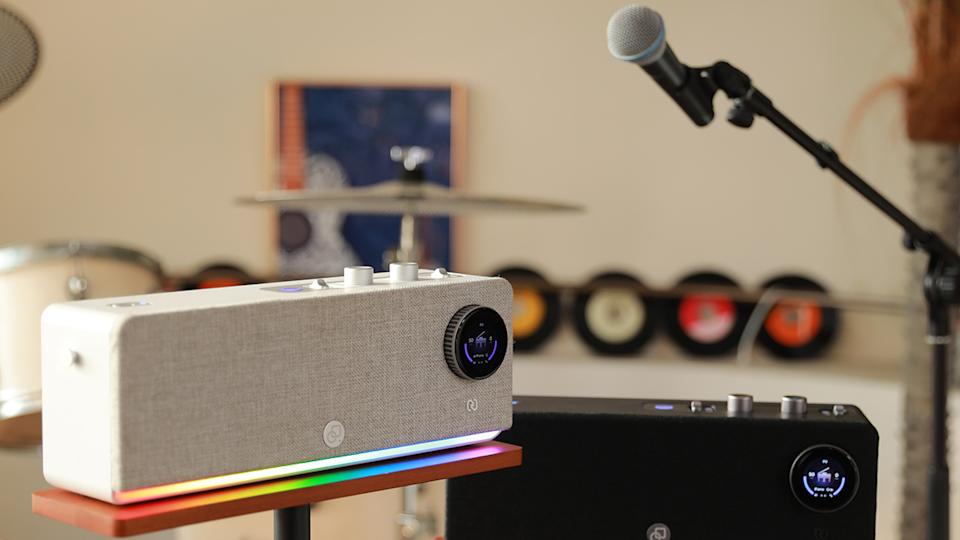
Visual Feedback |
Smart light strip pulses with beat |
Visual metronome function |
|
Control Interface |
Physical knobs and touchscreen |
Instant adjustments |
Why This Matters:
Common Alternative: External drum machines or smartphone apps require additional devices, cables, audio mixing, and complicated setup, defeating portability goals.
Portable speakers are only portable if battery performance supports actual usage patterns.
|
Battery Capacity |
Typical Runtime |
Charging Time |
Real-World Usability |
|
Under 2000mAh |
2-3 hours |
2-3 hours |
Insufficient for practice |
|
2000-3500mAh |
3-5 hours |
2-4 hours |
Barely adequate |
|
3500-5000mAh |
5-8 hours |
3-5 hours |
Comfortable for most use |
|
5000-8000mAh |
8-12 hours |
4-6 hours |
Excellent for all-day use |
|
8000mAh+ |
12+ hours |
6-8 hours |
Professional applications |
PartyStudio Battery System:
|
Specification |
Details |
|
Capacity |
5000mAh lithium battery |
|
Continuous Runtime |
Up to 8 hours |
|
Charging Method |
USB-C PD Fast Charging |
|
Full Charge Time |
3 hours |
|
Play While Charging |
Yes, full functionality |
|
Charge Cycles |
500+ cycles (4-5 years typical use) |
|
Low Battery Warning |
Yes, 20-30 minutes advance notice |
Real-World Runtime by Usage:
Why This Matters:
Red Flag Warning: Speakers advertising battery life without specifying capacity or charging time often use undersized batteries requiring frequent recharging.
Control interface design determines whether adjustments feel natural during playing or require frustrating menu navigation.
|
Control Type |
Speed |
Reliability |
During Performance |
Learning Curve |
Failure Points |
|
App-Only |
Slow |
Phone-dependent |
Impractical |
High |
Phone/app/connection |
|
Touchscreen Only |
Moderate |
Good |
Difficult |
Moderate |
Screen |
|
Physical Controls Only |
Fast |
Excellent |
Easy |
Low |
Mechanical wear |
|
Hybrid (Physical + Screen) |
Fast |
Excellent |
Easy |
Low |
Minimal |
PartyStudio Control System:
Physical Controls:
Digital Control:
Why Hybrid Works Best:
Real-World Advantage: During performance, physical knobs allow instant volume adjustment without looking, while touchscreen enables detailed tone selection during setup or breaks.
Frequency response determines whether speakers reproduce all musical content accurately or emphasize certain frequencies while ignoring others.
|
Frequency Range |
Coverage |
Suitability |
Limitations |
|
120Hz - 15kHz |
Narrow |
Voice/basic audio |
Missing bass and air |
|
80Hz - 18kHz |
Moderate |
Basic music |
Weak bass |
|
60Hz - 20kHz |
Full range |
Professional music |
Ideal for most instruments |
|
40Hz - 22kHz |
Extended |
Studio/audiophile |
Expensive, often unnecessary |
Musical Frequency Reference:
PartyStudio Specification: 60Hz - 20kHz (±10dB)
True portability requires considering weight, size, battery operation, and carrying solutions together.
|
Speaker Type |
Weight |
Battery |
Wireless |
Carrying |
Portability Score |
|
Studio Monitors |
15-30 lbs |
No |
No |
None |
1/10 |
|
Powered PA Speaker |
20-40 lbs |
Rare |
No |
Handle |
2/10 |
|
Portable BT Speaker |
1-3 lbs |
Yes |
Audio only |
Handle/strap |
6/10 |
|
Integrated MIDI Speaker |
5-8 lbs |
Yes |
MIDI + Audio |
Strap |
9/10 |
PartyStudio Portability Specifications:
|
Feature |
Specification |
|
Weight |
Approximately 6 pounds |
|
Dimensions |
Compact, single-hand carrying |
|
Battery Operation |
8 hours (full-day capable) |
|
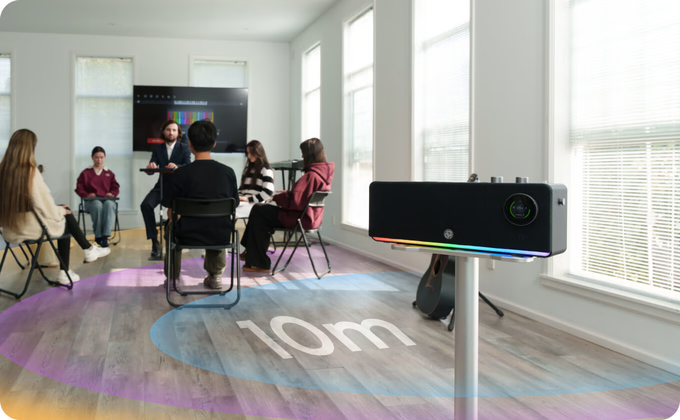
Wireless Range |
10 meters (room mobility) |
|
Carrying Solution |
Genuine leather hand strap |
|
Weather Resistance |
Woven grille design |
|
Setup Time |
Under 60 seconds |
|
Teardown Time |
Under 15 seconds |
Portability Use Cases:
Why This Matters:
The ability to connect multiple MIDI devices simultaneously expands creative possibilities and collaborative options.
|
Connectivity |
Simultaneous Devices |
Independent Tones |
Use Cases |
Limitations |
|
Single Device Only |
1 |
N/A |
Solo practice |
No collaboration |
|
Sequential Switching |
1 active |
N/A |
Solo practice |
Manual switching |
|
Multi-Device |
2-4 |
Yes |
Collaboration, layering |
Device-dependent |
PartyStudio Multi-Device System:
|
Feature |
Specification |
Application |
|
Wireless Connections |
3 via BLE MIDI |
Keyboards, controllers, drumsticks |
|
Wired Connection |
1 via USB MIDI |
Backup or preference |
|
Total Simultaneous |
Up to 4 devices |
Full band or layered solo |
|
Independent Tones |
Yes, per device |
Each keyboard different sound |
|
Synchronization |
Perfect timing |
No latency variance |
When evaluating any keyboard speaker, score it against these nine critical specifications:
Essential Specifications Checklist:
Power Output: 50-70W minimum for versatile use
Wireless Latency: Under 20ms for comfortable playing
Embedded Sounds: 100+ professionally-tuned tones
Rhythm Section: Built-in drum machine with 40+ patterns
Battery Life: 6-8 hours minimum for practical portability
Control System: Physical controls for critical functions
Frequency Response: 60Hz-20kHz for full instrument range
Portability: Under 10 pounds with carrying solution
Multi-Device: 3-4 simultaneous device connections
How PartyStudio Scores:
|
Specification |
PartyStudio |
Typical BT Speaker |
Studio Monitor |
|
Power Output |
70W ✓✓ |
20-30W ✓ |
50-100W ✓✓ |
|
Wireless Latency |
<16ms ✓✓ |
100-200ms ✗ |
N/A (wired) |
|
Embedded Sounds |
128 tones ✓✓ |
None ✗ |
None ✗ |
|
Rhythm Section |
50+ patterns ✓✓ |
None ✗ |
None ✗ |
|
Battery Life |
8 hours ✓✓ |
3-5 hours ✓ |
None ✗ |
|
Control System |
Hybrid ✓✓ |
App-only ✗ |
Physical ✓ |
|
Frequency Range |
60-20kHz ✓✓ |
80-18kHz ✓ |
50-20kHz ✓✓ |
|
Portability |
6 lbs ✓✓ |
2-3 lbs ✓✓ |
15+ lbs ✗ |
|
Multi-Device |
4 devices ✓✓ |
1 device ✗ |
1 device ✗ |
|
Total Score |
9/9 |
3/9 |
3/9 |
Choosing the best speaker for MIDI keyboard requires understanding which specifications actually impact your daily musical experience. Marketing materials emphasize flashy features while downplaying critical limitations.
These nine specifications determine whether your speaker:
The PartyStudio wireless MIDI speaker demonstrates how purpose-built design, guided by these specifications, creates systems that genuinely serve musicians rather than merely checking marketing boxes.
Before your next keyboard speaker purchase, evaluate candidates against these nine specifications. Products scoring highly across all nine criteria deliver satisfying, long-term musical value. Those excelling in some areas while failing others create frustration and eventual regret, regardless of their attractive pricing or compelling marketing.
A: 70W isn't about maximum volume—it's about power headroom that maintains clarity at moderate volumes. Lower-powered speakers (20-30W) sound thin and distorted when turned down to apartment-safe levels.
A: Not with BLE MIDI protocol. Traditional wireless audio (Bluetooth audio) compresses sound, adding latency and reducing quality.
A: Extremely important for musical development and motivation. Limited sounds create practice monotony and restrict genre exploration.
A: Yes, and it's superior. The 50+ rhythm patterns with adjustable BPM (40-240) provide more than timing—they teach rhythmic feel, groove, and musical context.
A: It's realistic for typical use. The 8-hour rating reflects moderate volume (50-60%) solo practice, which represents most actual usage. Maximum volume with all features active reduces runtime to 5-6 hours.
A: Three reasons: (1) Future-proofing—your needs may expand, (2) Collaboration—friends can connect their keyboards for jam sessions, (3) Creative expansion—eventually adding a second PartyKeys for 72 keys or layering capabilities.