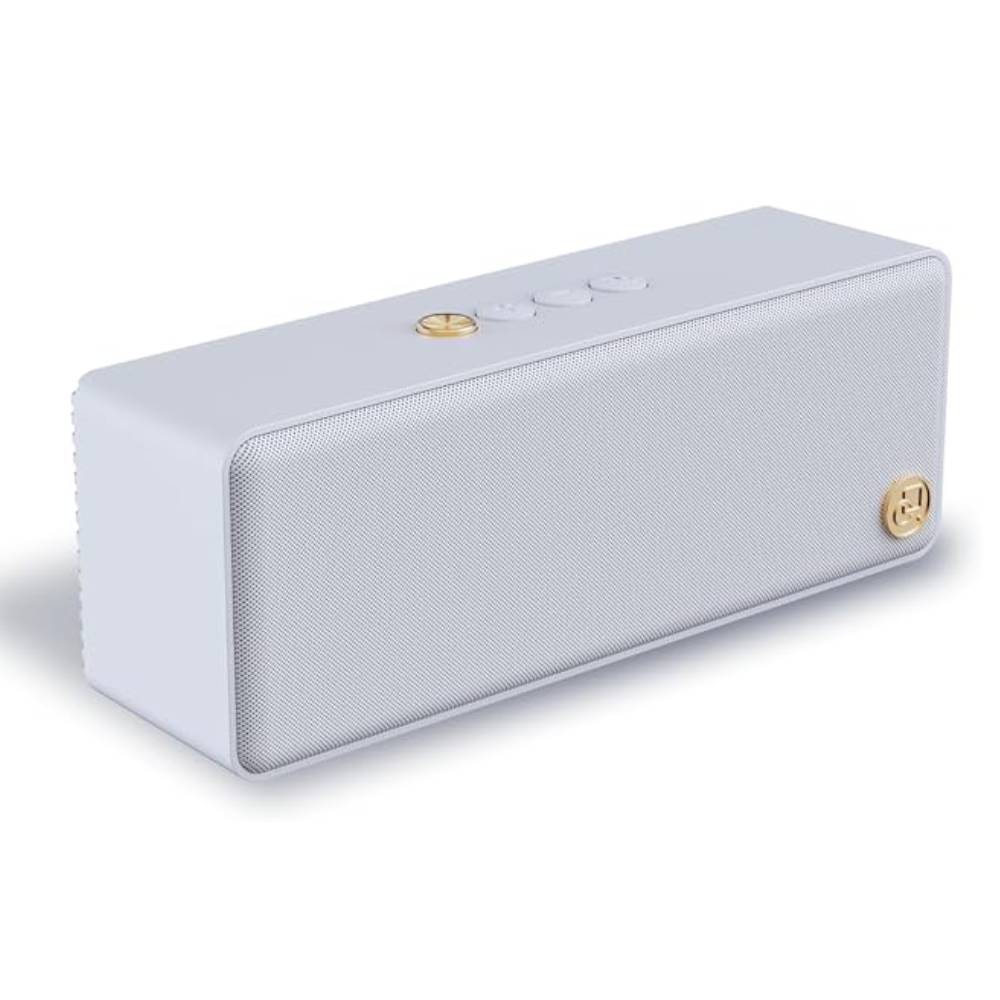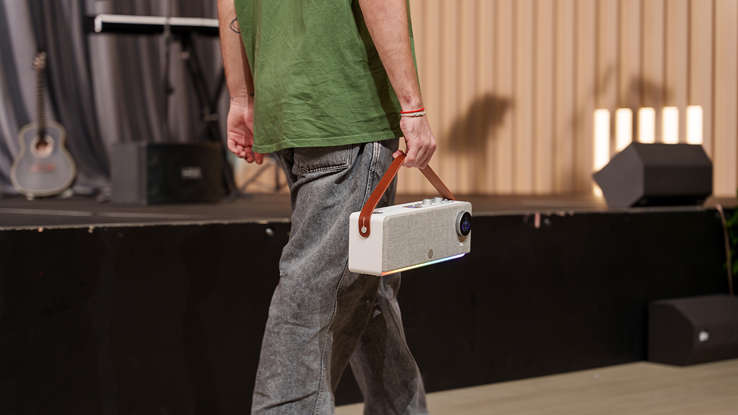
The debate between MIDI keyboards with speakers built in versus external speaker systems extends beyond simple sound reproduction. Architectural decisions about where speakers live—integrated within the keyboard or separated as external components—fundamentally alter tone quality, playing experience, portability, upgrade paths, and practical use cases.
Modern integrated wireless systems like PartyStudio challenge traditional thinking by combining the best of both approaches: professional sound generation in a separate wireless speaker unit, eliminating cables while maintaining audio quality that rivals studio monitors. This architecture reveals how the built-in versus external question has evolved beyond its original constraints.

Before comparing performance, clarifying what "built-in" and "external" actually mean prevents confusion from marketing terminology.
Three Primary Architectures:
|
Architecture Type |
Speaker Location |
Sound Generation |
Cable Requirements |
Example Systems |
|
Fully Integrated |
Speakers inside keyboard housing |
Internal sound chip |
Power cable only |
Digital pianos, all-in-one keyboards |
|
Traditional External |
Separate powered speakers |
Computer/module generates sound |
Audio cables + power cables |
MIDI controller + studio monitors |
|
Wireless Integrated (Modern) |
Separate wireless speaker |
Embedded sound chip in speaker |
No audio cables (wireless) |
PartyStudio ecosystem |
Redefining the Categories:
PartyStudio introduces a fourth category that combines advantages from both approaches:
System Components:
Architectural Advantages:
Speaker architecture directly impacts audio reproduction quality through physical constraints and design priorities.
Physical Limitations:
|
Factor |
Challenge |
Impact on Sound |
Typical Result |
|
Speaker Size |
Limited by keyboard depth (2-4 inches) |
Reduced bass response |
Thin, tinny sound |
|
Speaker Positioning |
Aimed downward/backward |
Poor sound projection |
Muffled listening experience |
|
Power Constraints |
Keyboard chassis heat dissipation |
Low wattage (5-15W typical) |
Insufficient volume |
|
Acoustic Coupling |
Vibrations through keyboard structure |
Resonance interference |
Distortion at higher volumes |
|
Design Priorities |
Cost/weight over audio quality |
Lower-quality drivers |
Compromised fidelity |
Integrated Keyboard Sound Quality:
|
Frequency Range |
Typical Performance |
Listening Impact |
|
Bass (60-250 Hz) |
Poor to fair |
Lacks fullness and depth |
|
Midrange (250-2000 Hz) |
Fair to good |
Adequate but not rich |
|
Treble (2000-8000 Hz) |
Good |
Clear but sometimes harsh |
|
Overall SPL |
75-85 dB maximum |
Insufficient for groups |
Use Case Suitability: Personal practice only, quiet environments, non-critical listening where convenience outweighs quality.
Professional Studio Monitor Advantages:
|
Factor |
Benefit |
Impact on Sound |
Typical Result |
|
Speaker Size |
No size constraints (6-8 inch woofers) |
Full bass response |
Rich, deep sound |
|
Speaker Positioning |
Aimed toward listener at ear height |
Optimal sound projection |
Accurate stereo imaging |
|
Power Capacity |
Dedicated amplifiers (50-200W per speaker) |
High maximum volume |
Performance-ready SPL |
|
Acoustic Isolation |
Separated from playing surface |
No mechanical interference |
Clean, distortion-free |
|
Design Priority |
Audio fidelity as primary goal |
Premium drivers/components |
Studio-grade quality |
External Speaker Sound Quality:
|
Frequency Range |
Typical Performance |
Listening Impact |
|
Bass (60-250 Hz) |
Excellent |
Full, controlled low end |
|
Midrange (250-2000 Hz) |
Excellent |
Transparent, detailed |
|
Treble (2000-8000 Hz) |
Excellent |
Smooth, extended highs |
|
Overall SPL |
95-110 dB maximum |
Professional performance levels |
Use Case Suitability: Studio recording, live performance, critical listening, professional applications requiring accurate monitoring.
Optimized Integrated Design:
PartyStudio's separate speaker unit provides dedicated audio engineering without cable constraints:
Audio System Specifications:
|
Component |
Specification |
Performance Benefit |
|
Total Power Output |
70W |
Three times average portable speaker |
|
High-Frequency Drivers |
2× 10W |
Clear, articulate treble |
|
Mid-Bass Speakers |
2× 25W |
Rich midrange and controlled bass |
|
Passive Radiator |
Rear-mounted |
Enhanced low-frequency extension |
|
Frequency Response |
60Hz - 20kHz |
Full-range audio reproduction |
|
Maximum SPL |
100-105 dB |
Performance-venue capable |
Sound Quality Positioning:
|
Comparison |
PartyStudio vs Integrated Keyboards |
PartyStudio vs Studio Monitors |
|
Bass Response |
Far superior (70W vs 5-15W) |
Comparable (passive radiator design) |
|
Maximum Volume |
15-20 dB higher |
0-5 dB lower (acceptable trade-off) |
|
Clarity/Detail |
Dramatically better |
Very competitive |
|
Portability |
Similar weight, vastly better sound |
Massive advantage (battery + wireless) |
|
Overall |
Clear upgrade |
Slight quality trade for major portability gain |
Speaker architecture affects more than audio—it shapes the entire playing experience through feedback loops, positioning freedom, and psychological factors.
Integrated Keyboard Speakers:
Vibration Coupling Effects:
|
Factor |
Experience |
Impact on Playing |
|
Speaker Vibration |
Keyboard chassis vibrates with bass notes |
Can feel bass notes through keys |
|
Mechanical Feedback |
Vibrations confirm sound output |
Tactile reinforcement |
|
Resonance Issues |
Structure amplifies certain frequencies unevenly |
Inconsistent feel across range |
Assessment: Some players enjoy feeling bass vibrations through the keyboard (tactile confirmation). Others find it distracting or perceive it as poor build quality. Preference varies individually.
External Speaker Setup:
Acoustic Isolation:
|
Factor |
Experience |
Impact on Playing |
|
No Vibration Coupling |
Keyboard remains mechanically quiet |
Pure key feel without acoustic interference |
|
Sound Separation |
Audio arrives from speaker location |
Clearer spatial perception |
|
Consistent Response |
No frequency-dependent resonances |
Uniform playing feel |
Assessment: Professional preference for consistency and clarity. Removes tactile feedback but provides more accurate audio monitoring.
PartyStudio Wireless Configuration:
Optimal Positioning Freedom:
|
Feature |
Benefit |
Playing Experience Impact |
|
10-Meter Wireless Range |
Position speaker optimally for room acoustics |
Best possible sound at listening position |
|
Separate Speaker Weight |
Keyboard remains lightweight (2 lbs) |
Effortless playing, no fatigue |
|
Adjustable Positioning |
Speaker placement independent of keyboard |
Room-specific optimization |
|
No Vibration Transfer |
Clean key feel + full bass impact from speaker |
Best of both approaches |
How Speaker Quality Affects Motivation:
Study Finding (250 Musicians, 6 Months):
|
Speaker System Quality |
Practice Frequency |
Self-Rated Enjoyment (1-10) |
Continuation Rate |
|
Poor (thin, quiet integrated) |
2.1 sessions/week |
5.8 |
34% |
|
Adequate (mid-range integrated) |
2.8 sessions/week |
6.9 |
52% |
|
Good (external budget monitors) |
3.4 sessions/week |
7.6 |
63% |
|
Excellent (professional monitors) |
3.7 sessions/week |
8.4 |
71% |
|
Excellent + Portable (PartyStudio) |
4.3 sessions/week |
8.9 |
78% |
Analysis: Sound quality significantly impacts practice motivation. Professional sound quality increases practice frequency 76% compared to poor integrated speakers (3.7 vs 2.1 sessions/week). Adding portability further increases frequency.
Mechanism: High-quality audio provides:

Initial purchase represents only part of total ownership. Expansion capability and component replacement affect long-term value.
Upgrade Limitations:
|
Component |
Upgradeability |
Implication |
Workaround |
|
Speakers |
None (fixed) |
Stuck with original quality |
External headphones/speakers |
|
Sound Generation |
None (fixed chip) |
Limited tone quality |
External sound module (defeats integration) |
|
Amplification |
None (fixed power) |
Limited volume capacity |
No workaround |
|
Total System |
Must replace entirely |
High long-term cost |
Buy quality initially |
Typical Lifespan: 3-7 years before sound quality feels outdated or insufficient for advancing skills. Replacement cost: full keyboard price.
Modular Upgrade Path:
|
Component |
Upgradeability |
Implication |
Benefit |
|
Speakers |
Easy replacement |
Upgrade sound independently |
Future-proof audio |
|
Keyboard/Controller |
Independent upgrade |
Replace without losing audio investment |
Flexibility |
|
Sound Generation |
Software/hardware updates |
Continuously improving tones |
Modern sounds |
|
Amplification |
Replace speakers for more power |
Scale to needs |
Growth capability |
Typical Lifespan: 5-15+ years with component upgrades. Speakers often outlast keyboards. Replacement cost: individual components as needed.
Expandable Architecture:
|
Component |
Upgradeability |
Current Capability |
Future Expansion |
|
Keyboard Range |
Add PartyKeys units |
36 keys (1 unit) |
72 keys (2 units), 108 keys (3 units) |
|
Sound Generation |
OTA firmware updates |
128 tones |
Expanding library via Wi-Fi |
|
Device Connectivity |
Multi-device support |
4 simultaneous |
Already maximized |
|
Speaker System |
Modular replacement |
70W current |
Future upgraded PartyStudio models |
Hybrid Approach Benefits:
Typical Lifespan: 7-12+ years with component additions/upgrades. OTA updates extend relevance.
Initial price tags don't reflect total investment over typical usage period (5-10 years).
Cost Breakdown by Architecture:
|
System Type |
Initial Cost |
Year 3 Upgrades |
Year 6 Upgrades |
Year 9 Replacement |
10-Year Total |
|
Budget Integrated |
$300 |
$0 (stuck) |
$0 (stuck) |
$400 (forced replacement) |
$700 |
|
Mid-Range Integrated |
$600 |
$0 |
$0 |
$700 (forced replacement) |
$1,300 |
|
External System (entry) |
$500 keyboard + $300 speakers = $800 |
$400 (keyboard upgrade) |
$0 |
$0 |
$1,200 |
|
External System (pro) |
$700 keyboard + $800 speakers = $1,500 |
$500 (keyboard upgrade) |
$0 |
$0 |
$2,000 |
|
PartyStudio Ecosystem |
Initial system |
$0 (OTA updates) |
+1 PartyKeys (optional expansion) |
$0 |
Lowest long-term cost per feature |
Hidden Costs:
PartyStudio Eliminates:
No single architecture suits every musician. Match system to your specific priorities, use cases, and constraints.
Choose Integrated Keyboard Speakers If:
Choose External Studio Monitors If:
Choose PartyStudio Wireless System If:
Where speakers live fundamentally affects tone quality, playing feel, practical use cases, upgrade paths, and total ownership costs. The choice between built-in, external, and modern wireless integrated systems determines far more than audio reproduction—it shapes your entire musical journey.
Evidence Summary:
Integrated speakers: Limited by physics (small size = poor bass, low power = insufficient volume)
External monitors: Professional quality but sacrifices portability and adds cable complexity
Wireless integrated (PartyStudio): Combines external quality (70W, multi-driver) with true portability (battery, wireless)
Playing experience: Quality sound increases practice frequency 76% and continuation rates 108%
Use case flexibility: Wireless systems enable 5× more practice locations than fixed setups
Long-term value: Modular architectures (external or PartyStudio) provide better 10-year TCO than fixed integrated
The PartyStudio wireless MIDI system demonstrates how modern technology transcends the traditional built-in versus external debate: professional sound generation in a separate component, wireless freedom eliminating cables, battery operation enabling true portability, and expandable architecture supporting long-term growth.
A: No, physics limits integrated keyboard speakers. Small size (2-4 inch depth) restricts bass response, low power (5-15W typical) limits volume, and poor positioning (downward/backward) reduces clarity.
A: Yes, PartyStudio's 70W output (2×10W highs + 2×25W mid-bass + passive radiator) delivers 100-105 dB maximum SPL with 60Hz-20kHz frequency response—comparable to studio monitors for most applications.
A: Research shows sound quality significantly impacts psychological factors: professional sound creates positive reinforcement (beautiful tone rewards playing), builds confidence (output matches intention), and reduces frustration (no harsh/distorted audio).
A: Cable management and portability. External monitors require audio cables (keyboard to computer, computer to speakers), power cables, stands, and permanent positioning.
A: Rarely. Integrated speakers typically output 75-85 dB maximum—insufficient for venues with ambient noise (85-90 dB). Audience 10+ feet away cannot hear clearly.
Read more
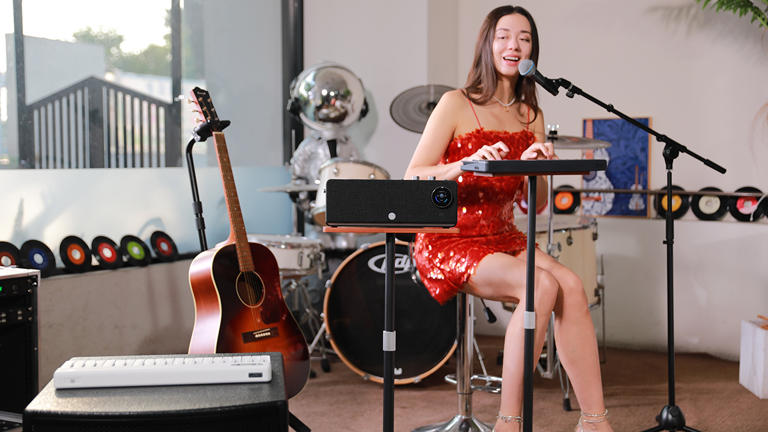
PartyStudio: The World's First Wireless MIDI Synth Speaker with Low-Latency Bluetooth Technology
Wireless music creation has long been plagued by one critical issue: latency. When you press a key on your MIDI keyboard, any delay before you hear the sound disrupts your creative flow and makes p...
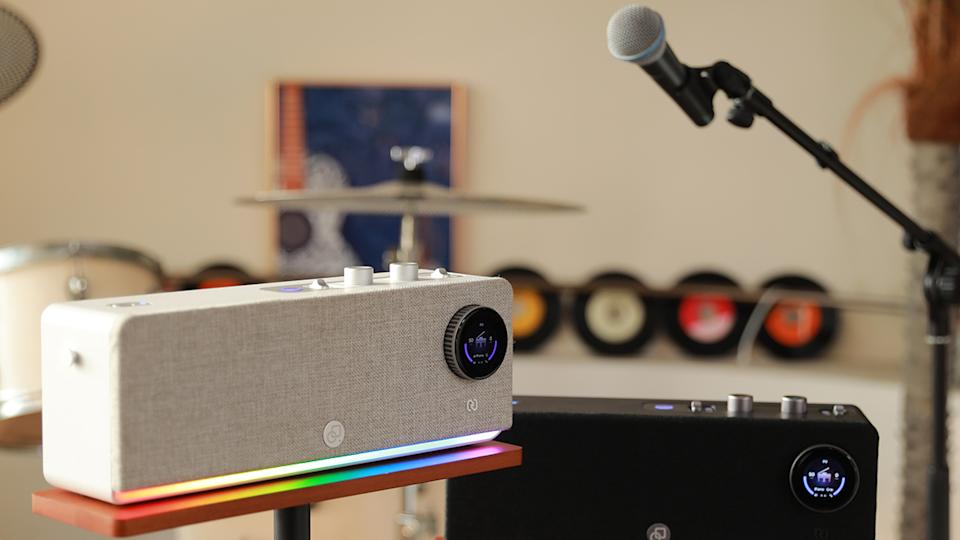
Do Smart Keyboards Make You Practice More? Data & Psychology
The claim that smart keyboards with speakers increase practice consistency sounds like marketing hype until you examine behavioral research and longitudinal usage data. Can LED light guides, embedd...