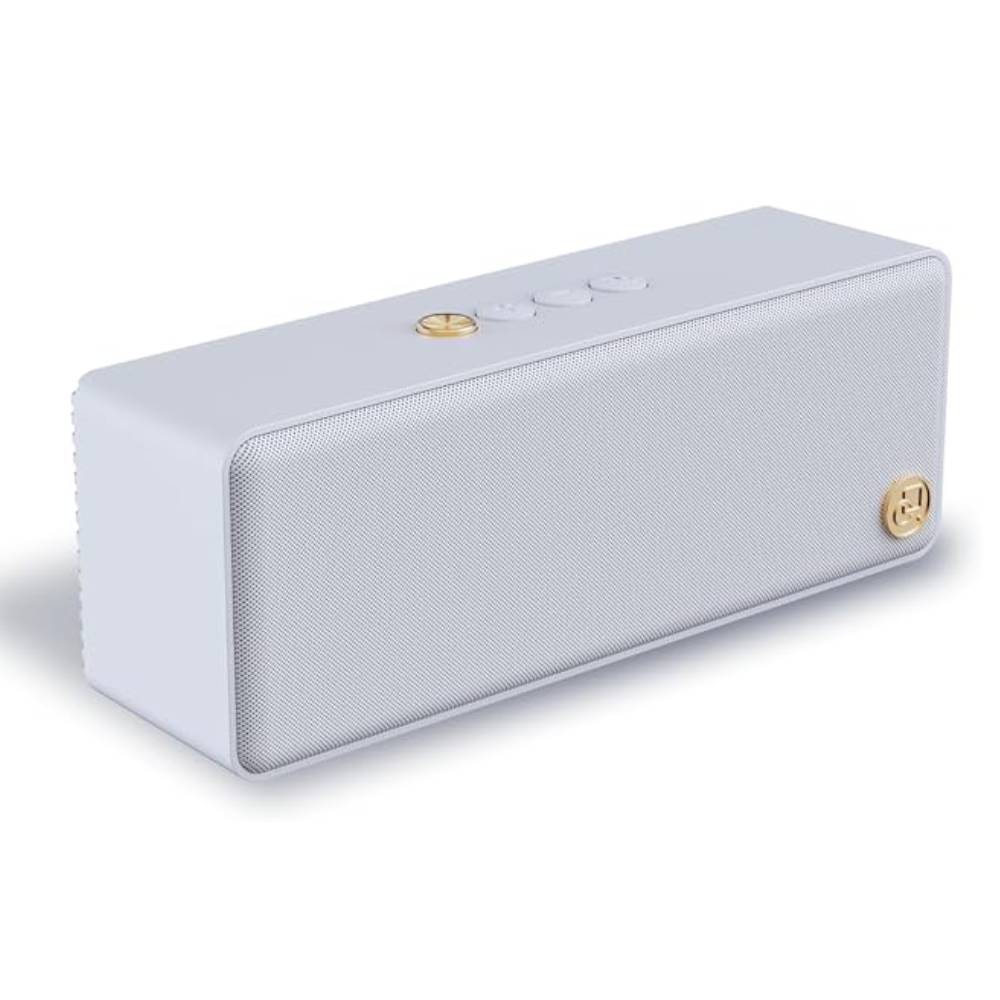
For decades, keyboard players have been tethered to their instruments by cablesMIDI cables, audio cables, power cables. It's a mess that limits movement, restricts creativity, and makes jamming in unconventional spaces nearly impossible. But what if you could play your MIDI keyboard from across the room, switch between 128 instrument sounds wirelessly, and power everything with professional-grade audio output?
The wireless MIDI revolution is here, and it's changing how musicians create.
Traditional MIDI setups require multiple connections: a MIDI cable to your sound module or computer, audio cables to speakers or headphones, and power cables for everything. Want to play standing up? You're limited by cable length. Want to jam on your bed or in the backyard? Forget it.
Even modern Bluetooth speakers fall short for musicians. They're designed for streaming music, not real-time instrument performance. The latencythat delay between pressing a key and hearing the soundmakes them unusable for serious playing. You need timing precision measured in milliseconds, not the 100-200ms delay typical Bluetooth audio introduces.

Here's the critical distinction: Bluetooth MIDI and Bluetooth Audio are completely different technologies.
Regular Bluetooth audio streams pre-recorded sound files. It compresses the audio, sends it wirelessly, then decompresses it at the speaker. This process introduces latency that you barely notice when listening to a podcast but is devastating when playing an instrument.
Bluetooth MIDI, specifically BLE-MIDI (Bluetooth Low Energy MIDI), transmits only the performance datawhich key you pressed, how hard you pressed it, when you released it. The actual sound generation happens at the receiving device. This approach drastically reduces latency and creates a responsive playing experience.
Think of it like this: instead of recording yourself playing piano and texting the video to a friend, you're sending them sheet music instructions to play on their own piano. The data transmission is far lighter and faster.
PopuMusic, the team behind successful crowdfunding campaigns for Populele, Poputar, and PopuPiano (raising over $2 million from 10,000+ backers), spent a decade refining wireless music technology. Their latest creation, PartyStudio, addresses every pain point of wireless keyboard performance.
PartyStudio achieves what most Bluetooth speakers can't: truly responsive wireless MIDI with imperceptible latency. Musicians at the Music China and Tokyo Musical Instrument Expo 2026 tested it firsthand, and the response was overwhelmingly positive.
How? By combining BLE-MIDI protocol optimization with a dedicated onboard sound chip that generates audio locally. The wireless connection only transmits lightweight MIDI data, not heavy audio streams.
Unlike typical setups that force you to choose one device, PartyStudio handles multiple MIDI inputs:
This means you could connect a keyboard playing piano sounds, another playing strings, a third with bass tones, and a fourth wired device with synthesizer soundsall playing together in perfect sync.
The built-in sound chip doesn't just offer generic MIDI sounds. Each of the 128 instrument tones has been expertly tuned by PopuMusic's music production team. From realistic piano and violin to guitar, drums, and yes, even helicopter sounds (for those experimental moments), you get professional-quality audio.
Not satisfied with 128 options? PartyStudio supports over-the-air updates via Wi-Fi, meaning new tones can be added continuously.
Every musician knows the value of a solid rhythm section. PartyStudio includes a built-in drum machine with:
Whether you're practicing scales, composing a new piece, or jamming with friends, having rhythm backing at your fingertips transforms the creative experience.
PartyStudio's 10-meter (33-foot) wireless range means genuine freedom. Play from your couch. Stand across the room during practice. Take your keyboard to the backyard. The wireless connection stays solid.
This isn't just a technical specificationit's a fundamental shift in how you interact with your instrument. Musicians report that being able to move freely changes their creative process, making practice feel less formal and more exploratory.
Despite its portability, PartyStudio delivers serious audio power:
The audio quality rivals dedicated studio monitors while remaining compact enough to carry anywhere. A built-in 5000mAh battery provides up to 8 hours of playtime, with fast USB-C charging bringing it back to full power in just 3 hours.
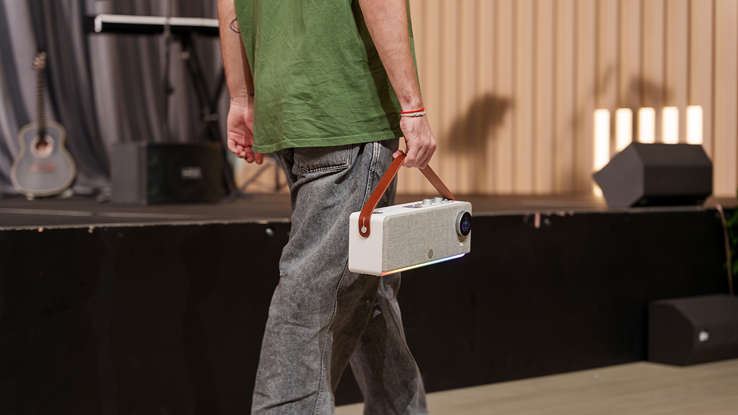
A vibrant bottom LED strip doesn't just look coolit pulses and shifts colors in perfect sync with your music. This visual feedback creates an immersive experience, whether you're performing for an audience or practicing alone. It transforms sound into a multi-sensory experience.

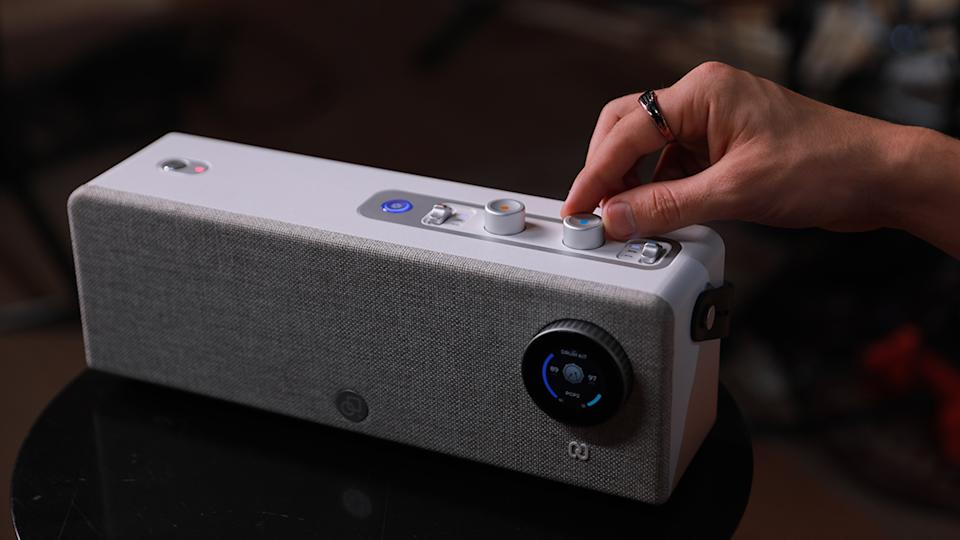
One of PartyStudio's standout features is its straightforward control interface:
No complex menu systems. No software to install. No manual reading required. Everything you need is accessible through physical controls, keeping you focused on making music rather than navigating technology.
For detailed work or private practice, plug in headphones to isolate your sound. This is invaluable for critical listening, late-night sessions, or when you need to focus without disturbing others.
PartyStudio isn't just a standalone speakerit's the hub of an expanding creative ecosystem. PartyKeys keyboards integrate seamlessly:
Both PartyStudio and PartyKeys feature built-in NFC. Pairing is literally as simple as touching the two devices together. No Bluetooth menus. No pairing codes. Just touch and play.
Each PartyKeys unit has 36 keys and can connect with up to two additional keyboards, creating a full 108-key setupmore than a traditional 88-key piano. The keyboards feature:
The modular approach means you start with what you need and expand as your skills grow. For group sessions, connect multiple keyboards and turn any space into a jam session.
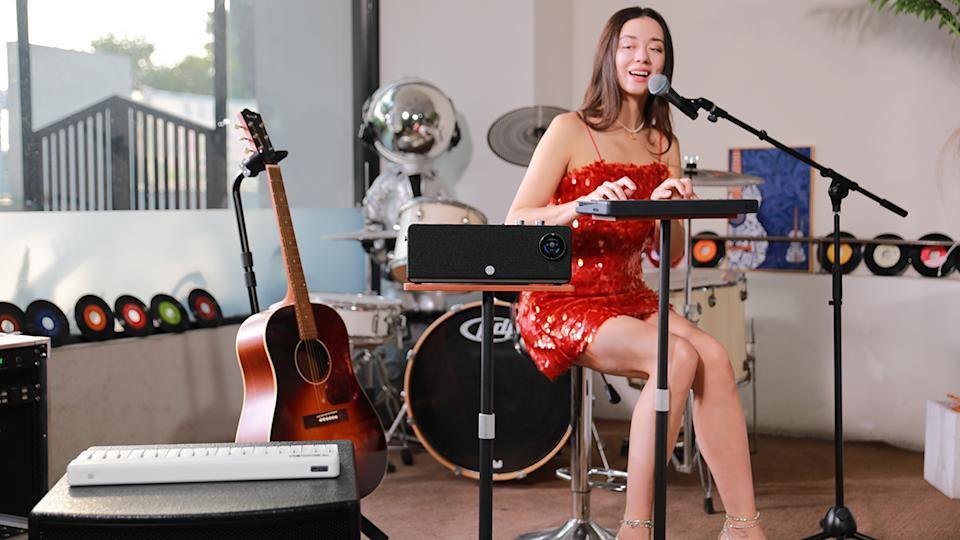
PopuMusic designed a professional performance stand specifically for the PartyStudio system:
This setup turns casual play into professional performance capability.
Imagine practicing piano without being chained to a specific room or position. Set up PartyStudio on your desk while you play from the couch. Place it in the living room while you practice in your bedroom. The wireless freedom removes the psychological barrier that makes practice feel like a chore.
Connect multiple keyboards and drumsticks to instantly form a band. PartyStudio's ability to assign different instrument tones to each connected device means everyone can have their own voice. Unlike traditional band setups requiring multiple amps and a massive footprint, PartyStudio consolidates everything into one portable system.
For music creators, PartyStudio integrates with DAWs (Digital Audio Workstations) through its MIDI connections. Use it as both a practice speaker and a professional recording tool. The headphone output allows for silent monitoring during recording sessions, while the 70W speakers let you share your creation with others.
Weighing far less than traditional keyboard amplifiers and powered by battery, PartyStudio is genuinely portable. Take it to the park, the beach, a friend's house, or anywhere inspiration strikes. The rugged build quality withstands transport, and the battery life supports full-day sessions.
Heavy, immobile, and require permanent setup space. They're excellent for dedicated studios but impractical for anyone wanting flexibility.
The 100-200ms latency makes real-time playing impossible. They're fine for background music but not for performance.
Require a laptop running DAW software, creating dependencies on boot times, software updates, and potential crashes. The setup process alone can kill creative momentum.
Combining a MIDI keyboard, sound module, mixer, and amplifier works but demands significant space, multiple power outlets, and complex cable management. It's the opposite of spontaneous.
PartyStudio consolidates all these components into a single wireless system without compromising audio quality or functionality.

Bluetooth Low Energy MIDI is a relatively recent standard that balances power efficiency with performance. Unlike classic Bluetooth audio, it's optimized for the rapid, small data packets that MIDI generates.
By generating audio locally rather than streaming it wirelessly, PartyStudio eliminates the primary source of latency in wireless audio systems. The sound chip responds to MIDI commands in real-time, producing audio indistinguishable from wired connections.
Supporting both wireless and wired MIDI connections simultaneously provides flexibility. If you have a device without Bluetooth MIDI capability, the wired connection ensures compatibility with virtually any MIDI keyboard ever made.
That's it. No software installation. No driver downloads. No configuration files. From unpacking to playing takes about two minutes.
PartyStudio is currently available on Kickstarter with exclusive early bird pricing:
With 152 backers pledging $58,629 (over 11x the $5,000 goal) and estimated delivery in February 2026, the campaign demonstrates strong market validation.
Compare this to traditional setups:
PartyStudio delivers equivalent functionality in a single, portable package at a fraction of the total cost.
Founded in 2015 by Bruce Zhang, PopuMusic has consistently delivered on crowdfunding promises:
Trusted by over 10,000 backers across previous campaigns, the company has raised more than $2 million. Manufacturing is already in place and ready to scale, with prototype testing, material sourcing, and production setup complete.
Unlike many crowdfunding projects that struggle with manufacturing, PopuMusic's decade of experience and established production relationships minimize fulfillment risk.
The Wi-Fi connectivity for over-the-air updates means PartyStudio improves over time. New instrument tones, enhanced rhythm patterns, and feature additions can be delivered remotely, extending the product's useful life far beyond initial purchase.
This software-updateable approach mirrors the smartphone modelbuy once, receive improvements for years.
The combination of light-guided learning (with PartyKeys) and professional sound output creates an encouraging learning environment. You sound good from day one, which maintains motivation.
The wireless freedom and multiple device connectivity support skill development and musical exploration without requiring major equipment investment.
Professional audio quality, low latency, and MIDI compatibility with existing gear make PartyStudio a legitimate performance and recording tool, not just a practice speaker.
Teaching multiple students simultaneously becomes practical when each can have their own keyboard connected to one shared speaker system.
For YouTube musicians, TikTok creators, and livestreamers, PartyStudio provides both the audio output for monitoring and the visual element (LED synchronization) that enhances video content.
PartyStudio isn't just incrementally better than existing solutionsit's a fundamental rethinking of how wireless keyboard systems should work. By focusing on the specific needs of musicians rather than adapting consumer audio technology, PopuMusic created something truly new.
The wireless MIDI approach solves latency issues. The built-in sound chip eliminates external dependencies. The modular keyboard system grows with your needs. The professional audio output rivals dedicated studio equipment. All in a battery-powered, portable package you can take anywhere.
For keyboardists frustrated by cables, limited by stationary setups, or wanting to explore music in new environments, PartyStudio represents exactly the kind of innovation the music industry needs.
The Kickstarter campaign runs until January 16, 2026, with shipping scheduled for February 2026. Early bird pricing won't last, and based on PopuMusic's track record, this is one crowdfunding campaign likely to deliver as promised.
Visit the campaign at: PartyStudio on Kickstarter
PartyStudio uses BLE-MIDI (Bluetooth Low Energy MIDI) protocol combined with a local sound chip to achieve near-zero latency. While exact millisecond measurements aren't published, musicians who tested it at Music China and Tokyo Musical Instrument Expo 2026 reported imperceptible delay, making it suitable for real-time performance.
PartyStudio works with any MIDI keyboardyou don't need PartyKeys. It supports three wireless BLE-MIDI connections simultaneously plus one wired MIDI connection. If your keyboard has Bluetooth MIDI capability, it connects wirelessly. If not, use the wired MIDI port on the back of PartyStudio.
The 5000mAh battery provides up to 8 hours of continuous playtime, which is sufficient for a full day of practice or multiple performances. Fast USB-C charging restores full power in 3 hours. Importantly, PartyStudio functions normally while charging, so you can plug it in for extended sessions or permanent studio setups without any limitations.
The 128 built-in tones are high-quality sounds generated by PartyStudio's embedded sound chip, tuned by professional music producers. These work independentlyno computer required. You can also connect PartyStudio to a DAW (Digital Audio Workstation) via MIDI to access unlimited virtual instruments and recording capabilities.
PartyStudio supports up to four MIDI devices simultaneously (three wireless + one wired). Each connected keyboard can be assigned a different instrument tone, allowing multiple people to play different instruments through the same speaker system. For example, one person could play piano, another bass, a third drums, and a fourth guitar all in perfect sync.
Wi-Fi over-the-air updates are built into PartyStudio's architecture, not a vague promise. PopuMusic's previous products (Populele, Poputar, PopuPiano) all received software updates post-launch, establishing their track record for ongoing support.
PopuMusic has fulfilled four previous crowdfunding campaigns (Populele, Populele 2 Pro, Poputar, PopuPiano), raising over $2 million from 10,000+ backers. Manufacturing is already in place with prototype testing completed and production setup ready to scale. Estimated delivery is February 2026.
Read more
2.4 GHz vs Bluetooth for Keyboards: Which Is Really Low-Latency?
When you press a key on a wireless keyboard, how fast should you hear the sound? For typing emails, a few milliseconds of delay barely matters. But for playing music, even tiny delays can ruin your...
Built-In Speakers on Keyboards: Pros, Cons, and Who They’re For
When shopping for a MIDI keyboard or digital piano, one of the first questions that comes up is: "Does it have built-in speakers?" It seems like a simple convenience feature, but the answer reveals...